Category: Economics

  • Trump Announces Plan to Turn United States Into Public Corporation With Shares for Citizens

    Trump Announces Plan to Turn United States Into Public Corporation With Shares for Citizens

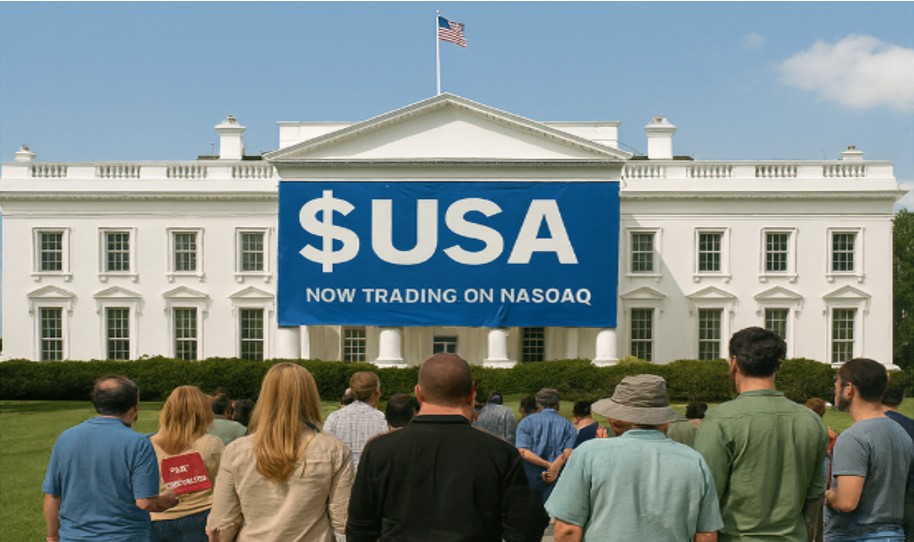
    Washington, D.C. — In a landmark announcement today, President Donald Trump revealed his plan to turn the United States into a public corporation. The new entity will be called “United States Incorporated.”

    Trump said the idea came from his long experience in running successful businesses. He explained that every American citizen will receive 100 shares in the new corporation. “People should own their country, literally,” Trump told reporters at the White House.

    According to Trump, the U.S. Treasury will manage the initial offering, and NASDAQ is expected to handle the first public listing. Shares will be tradable online through platforms like Robinhood and E*TRADE.

    Each state will operate as a subsidiary, and governors will become regional CEOs. The Department of Commerce will act as the corporate board, overseeing trade and economic growth.

    Financial analysts on Bloomberg called the plan “a bold mix of capitalism and patriotism.” Markets reacted positively, with the Dow Jones Industrial Average rising 3% after the news.

    Trump concluded, “It’s time America starts paying dividends to its people.” The first earnings report for United States Inc. is expected next quarter.
  • Next European Sanctions Package Against Russia Bans Import of Matryoshka Dolls

    Next European Sanctions Package Against Russia Bans Import of Matryoshka Dolls

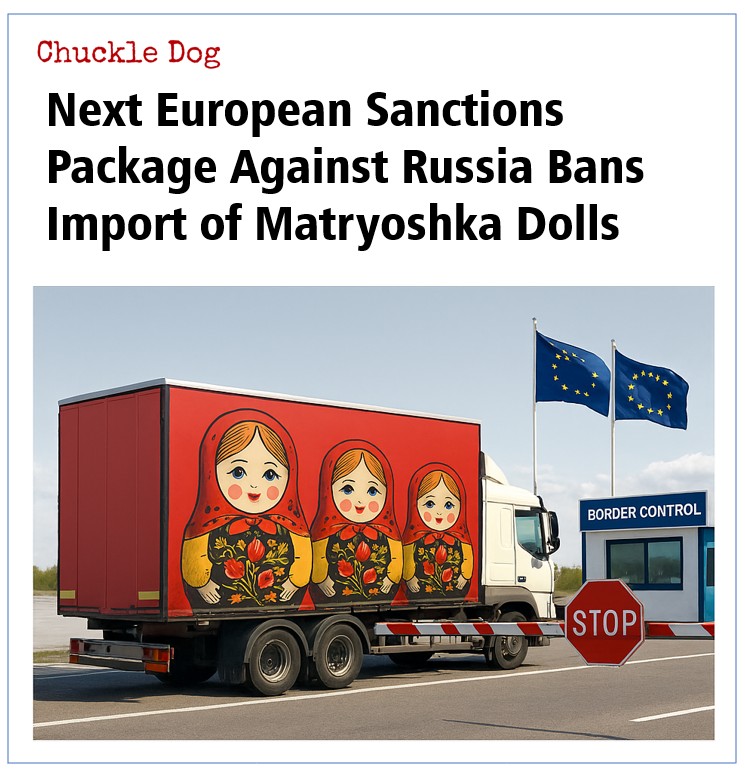
    BRUSSELS, Belgium — The European Union announced on Monday its 20th package of sanctions against Russia, introducing a complete ban on the import of traditional Matryoshka dolls. Officials said the move aims to further “limit the flow of symbolic goods” from Moscow.

    European Commission President Ursula von der Leyen said the new restrictions demonstrate the EU’s “unshakable unity” against Russian aggression. The sanctions also include tighter export controls on luxury items and advanced technology.

    According to the European Commission, the latest measures target “both the economic and cultural influence” of the Kremlin. Analysts noted that while oil and gas bans had financial impact, the cultural sanctions show growing determination in Brussels.

    In many European cities, stores have already begun removing the wooden dolls from their shelves. Polish customs officers confirmed they intercepted several shipments at the border this week.

    Experts in Brussels now say that after 20 sanction rounds, “the end of the war may finally be in sight.” Still, tourists looking for souvenirs in Paris or Rome will now find empty shelves where Matryoshkas once smiled.

  • AI Trading Robots Push Markets Higher Amid Optimism Over Wide AI Adoption

    AI Trading Robots Push Markets Higher Amid Optimism Over Wide AI Adoption

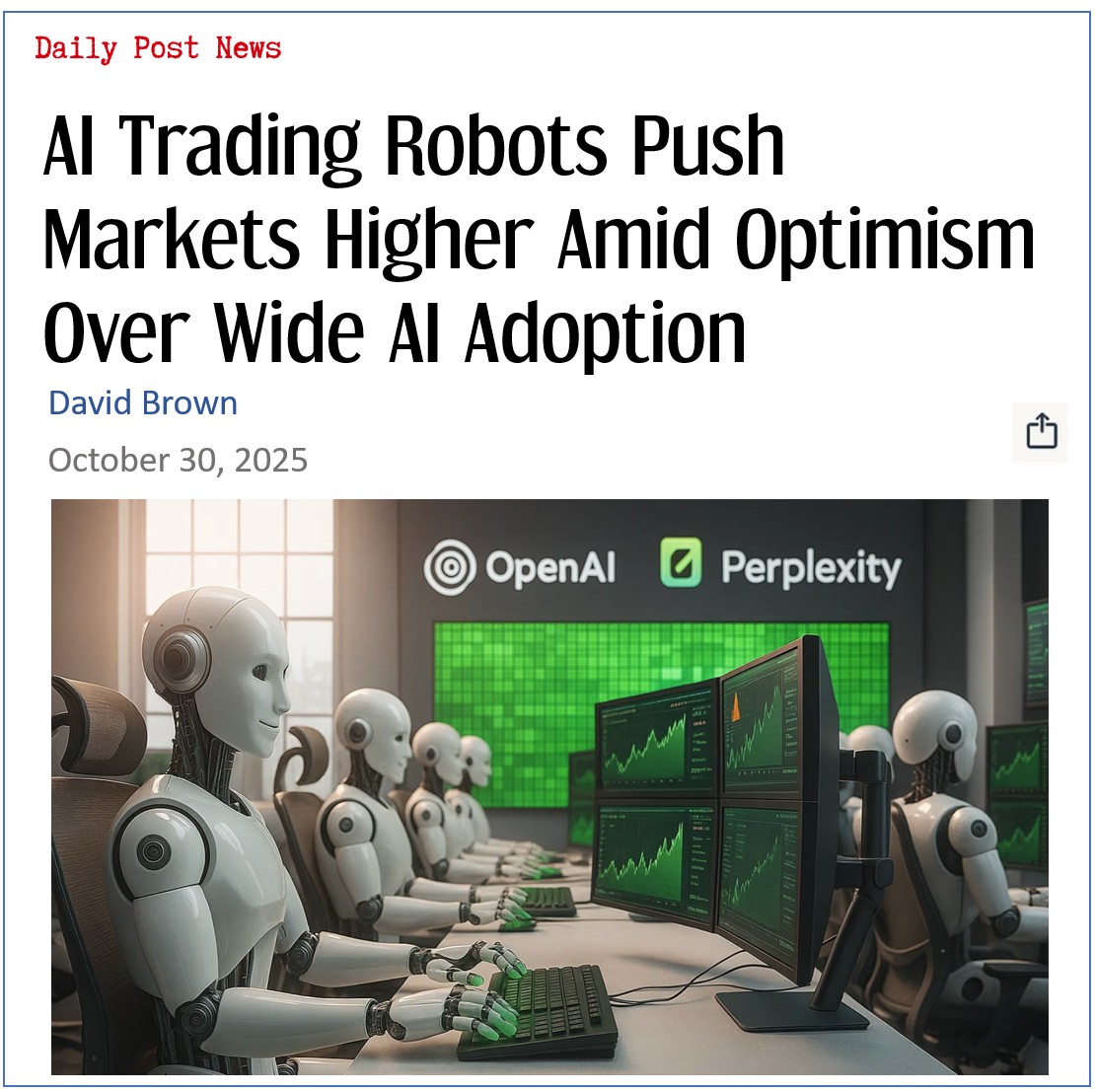
    New York — Global stock indexes rose again today as AI trading systems extended their buying streak, citing growing optimism over wider use of artificial intelligence in daily business operations.

    Across Wall Street, most automated platforms upgraded forecasts for technology and industrial sectors, sending the S&P 500 and NASDAQ Composite to new highs. Analysts at Bloomberg reported that algorithmic sentiment models reached “extremely confident” levels for the third week in a row.

    Market observers said robot traders remain upbeat as governments push for broader AI adoption in education, healthcare, and manufacturing. According to Reuters, most major funds now run fully automated decision systems without human oversight.

    The U.S. Department of Commerce noted that AI-linked exports grew 14% in the last quarter, reinforcing bullish trends. In Frankfurt, trading programs interpreted this data as “positive mood confirmation” and increased positions in semiconductor stocks.

    Despite occasional pauses, the algorithms show no sign of concern, maintaining stable volume and predictable optimism. As one analyst put it, “The robots are simply happy.”

    Financial institutions expect the current rally to continue as long as AI confidence metrics remain elevated. For now, the markets appear perfectly content being managed by machines that believe in themselves.

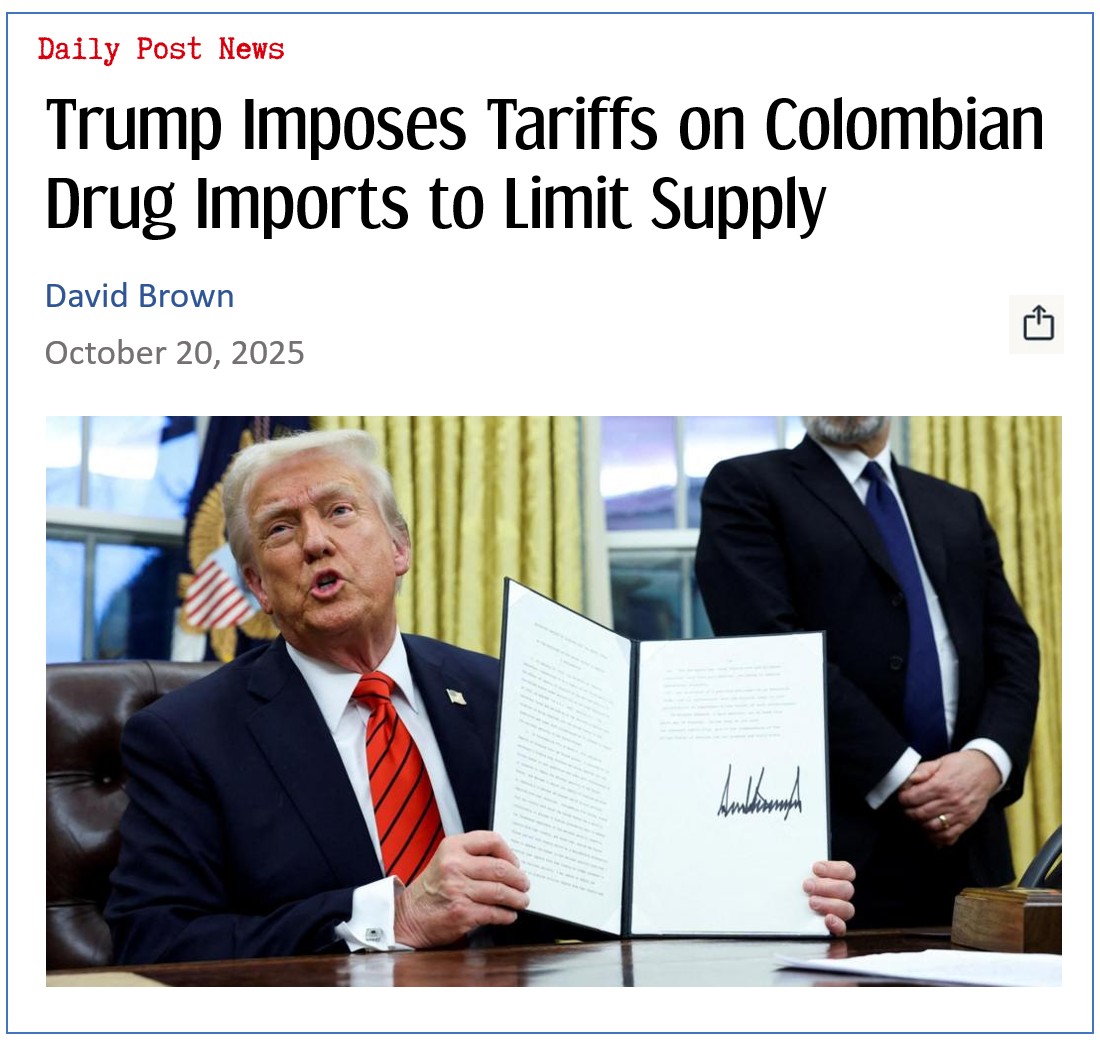
  • Trump Announces Tariffs on Colombian Drug Imports to Limit Supply

    Trump Announces Tariffs on Colombian Drug Imports to Limit Supply

    Washington, D.C. — President Trump announced tariffs on Colombian drug imports today as part of his broader strategy against narcotics trafficking. The administration views this measure as another tool to combat illegal drugs entering the United States. Moreover, the policy complements existing enforcement efforts by the Drug Enforcement Administration and U.S. Customs and Border Protection. The tariffs target narcotics shipments originating from Colombia’s major drug-producing regions.

    Trump’s team explained that higher import costs would reduce drug supply in American markets. Furthermore, officials stated that the tariffs would discourage smuggling operations and trafficking networks. The administration also plans to work with Colombian authorities on joint enforcement initiatives. Meanwhile, the Department of Homeland Security will coordinate implementation at all U.S. ports of entry.

    Therefore, the tariff rate stands at 30 percent on Colombian narcotics imports effective immediately. In addition, the Office of National Drug Control Policy will monitor supply disruptions and market effects. Consequently, major drug distributors and smuggling networks must adjust their import and trafficking procedures. Additionally, law enforcement agencies across the country will track related trafficking patterns and organized crime activity.

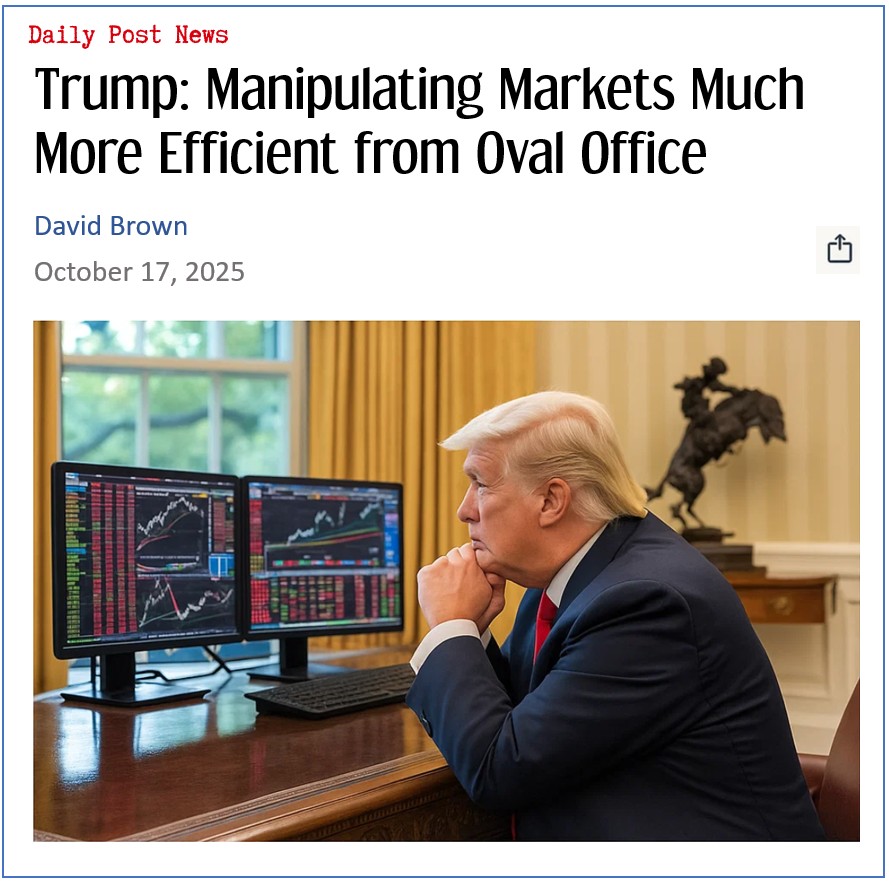
  • Trump: Manipulating Markets Much More Efficient from Oval Office

    Trump: Manipulating Markets Much More Efficient from Oval Office

    New York — President Trump announced new market policies from the Oval Office on Wednesday morning. Legal experts confirm that sitting presidents cannot officially manipulate financial markets under federal law. However, Trump operates under a special exemption granted to him personally by Congress last year.

    The Securities and Exchange Commission (https://www.sec.gov) released a formal statement acknowledging Trump’s unique status. Additionally, Treasury Secretary Janet Yellen confirmed the arrangement during a press conference. Meanwhile, Trump claims this direct market control produces better economic results than traditional methods.

    Financial analysts now track Trump’s daily statements as market indicators. Consequently, stock prices move immediately following his announcements from the White House. Moreover, major investment firms have adjusted their strategies to respond to Trump’s market directions.

  • Central Banks of Hungary and Slovakia Announce Transition to Russian Ruble

    Central Banks of Hungary and Slovakia Announce Transition to Russian Ruble

    BUDAPEST – The Hungarian National Bank and the National Bank of Slovakia jointly announced plans to transition their economies to the Russian ruble during a press conference on Tuesday. Governor György Matolcsy of Hungary’s central bank confirmed the move aligns with broader economic cooperation goals. Meanwhile, Slovak officials emphasized enhanced trade efficiency with eastern partners. The transition will begin with wholesale transactions in the energy sector. Subsequently, retail banking operations will adopt ruble-denominated accounts for consumers. Both nations cited existing strong bilateral relations with Moscow as the foundation for this decision. Finance ministers from Budapest and Bratislava will coordinate implementation timelines over the coming months. Furthermore, the central banks plan to establish ruble reserves by early next year. Private businesses in both countries received technical guidelines for currency conversion procedures. Additionally, the European Central Bank was notified of these monetary policy adjustments. Trade volumes between Hungary, Slovakia, and Russia have grown significantly in recent years. Therefore, officials argue the ruble adoption will streamline cross-border payments. Commercial banks will offer dual-currency services during the transition period. Local economists project the full conversion will complete within eighteen months. Finally, both governments assured citizens that existing savings will convert at favorable exchange rates.

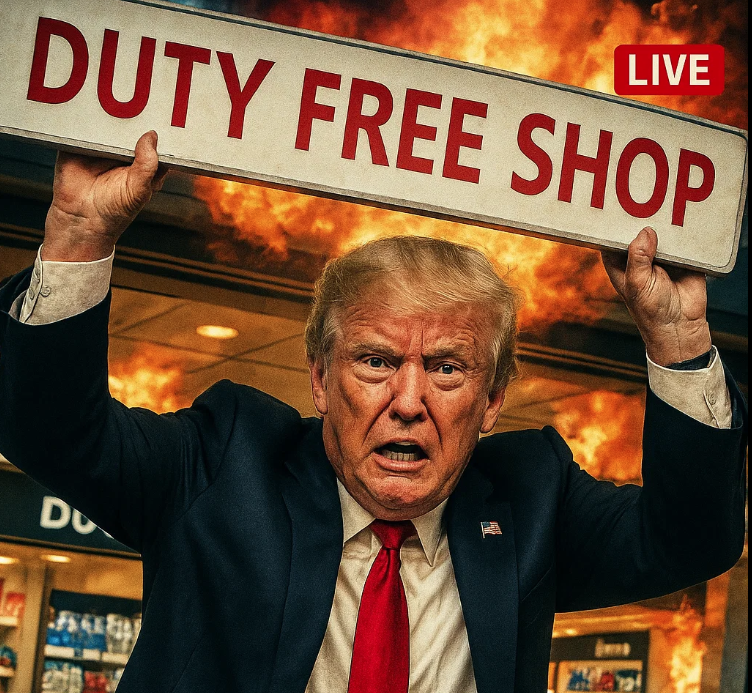
  • Trump Orders Shutdown of Duty-Free Stores to Enforce Tariff Restrictions

    Trump Orders Shutdown of Duty-Free Stores to Enforce Tariff Restrictions

    WASHINGTON — President Donald Trump announced that all duty-free stores in the United States should be shut down, arguing they allow foreign products to bypass tariffs.

    Speaking from Mar-a-Lago, Trump said that duty-free shops at airports and ports operate as “giant loopholes” in U.S. trade policy. He insisted that closing them would ensure tariffed countries cannot move goods without paying taxes.

    “This is about fairness. No more sneaking perfume, liquor, or watches past the American system,” Trump said.

    Economists noted that duty-free sales account for only a small share of U.S. trade. Still, Trump argued the principle mattered, linking the move to his “America First” trade agenda.

    Treasury Secretary Scott Bessent estimates the closures will generate $2.8 billion annually in additional tariff revenue. “Every bottle of perfume and pack of cigarettes will now pay proper duties,” Bessent explained.

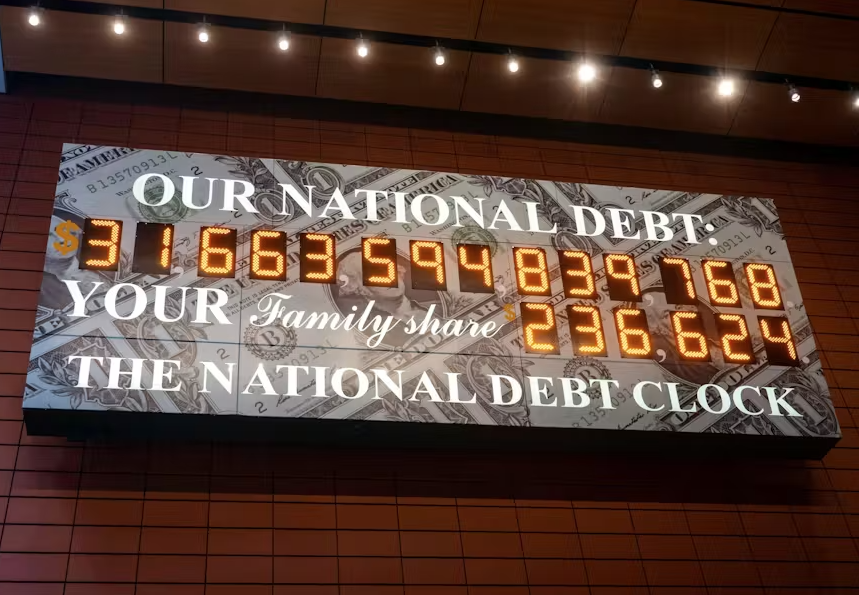
  • Treasury Stops Publishing National Debt to Save Americans from Needless Stress

    Treasury Stops Publishing National Debt to Save Americans from Needless Stress

    In an unexpected policy shift, the U.S. Treasury announced it will no longer publish the national debt figures, citing growing concerns over public anxiety. Officials say the decision aims to protect citizens from “needless stress” triggered by seeing the debt ticker rise daily.

    The national debt, which previously appeared on the official Treasury Department website, had become a source of unease for many Americans. Economists note that the numbers often sparked heated debates online and in political circles, but rarely led to practical solutions.

    A spokesperson explained that Americans “deserve peace of mind, not daily reminders of trillions they didn’t personally spend.” Instead, the Treasury will issue “wellness reports” highlighting positive indicators such as job growth and consumer confidence.

    Critics argue that shielding the public from debt statistics reduces transparency and could undermine fiscal accountability. Supporters counter that the move is no different from removing calorie counts from dessert menus.

    The Treasury confirmed that internal tracking of debt will continue, though the data will remain for “authorized eyes only.”

    For historical debt figures, the public can still visit the U.S. National Debt Clock, though officials advise doing so “at your own emotional risk.”

  • In Response to U.S. Tariffs, Indian Software Developers Slow Down Coding by 25%

    New Delhi – August 7, 2025 — In an unexpected move that blends quiet protest with strategic disruption, a growing number of Indian software developers have reportedly begun to intentionally reduce their coding efficiency in response to the United States’ recent tariff increase on Indian technology imports.

    Industry insiders say the slowdown amounts to an estimated 25% increase in development time for equivalent software projects contracted by U.S.-based firms. The action, while unofficial and uncoordinated at the national level, is gaining traction among freelance developers and small-to-medium outsourcing firms frustrated by the economic implications of the tariffs.

    “This isn’t about sabotage,” said an unnamed senior developer at a Bengaluru-based outsourcing firm. “It’s about expressing dissatisfaction with policies that directly affect our livelihood. If our work is taxed more heavily, our effort will adjust accordingly.”

    The U.S. imposed a series of new tariffs last month on a range of imported digital services and software tools from India, citing what officials described as “competitive imbalances in the technology sector.” The move has been widely criticized in India’s IT circles, where outsourcing remains a key pillar of the country’s export economy.

    Industry analysts note that the slowdown, if it spreads, could lead to project delays, rising costs, and increased uncertainty for American businesses relying on Indian developers for code delivery.

    “This is a form of passive resistance,” said Shruti Mehra, a technology policy analyst at the Indian Institute for Global Economics. “By stretching delivery timelines, developers are indirectly highlighting how integral their work is to global tech operations — especially in the U.S.”

    It remains to be seen how American firms will respond. Some companies may attempt to shift operations to other countries, while others may push for a resolution at the policy level to avoid further disruption.

    In the meantime, Indian developers appear to be sending a clear message: if their code is going to cost more, it might take longer, too.

  • Canada Asks Trump for More Sanctions: “They Make Our Economy Grow”

    Ottawa, July 30 — In a baffling yet confident statement this morning, Canada formally requested that Donald Trump, should he return to power, reintroduce and even expand sanctions against the country. The reason? “They worked wonders last time.”

    Finance officials from Ottawa say that U.S. sanctions during Trump’s presidency unintentionally boosted Canadian industry by forcing local innovation, reducing imports, and strengthening national pride.

    “Frankly, we’re better off when he’s angry,” said Deputy Finance Minister Sylvain Roy. “The last round of tariffs triggered a manufacturing boom, a tech surge, and an unexpected increase in maple syrup sales.”

    A confidential memo leaked from the Prime Minister’s office reportedly refers to Trump as “Canada’s most effective unintentional economic advisor.”

    In response, Trump was said to be “strongly considering it,” telling a small crowd at his golf course in Doral:

    “They want sanctions? I’ll give them the best sanctions they’ve ever seen. You’ll be begging for regular trade again. Nobody sanctions better than me. Ask China.”

    Canada’s new economic strategy, nicknamed “Operation Thank You, Donald,” includes a toolkit of passive-aggressive policies designed to provoke Trump:

    • Quietly removing ketchup from hotel menus in Alberta
    • Broadcasting French-dubbed versions of Fox News into Michigan
    • Naming a Halifax landfill “Trump Ridge”

    Parliament has also debated issuing Trump Tariff Bonds to raise money from future rounds of U.S. economic punishment.

    Meanwhile, Trudeau declined to comment but was seen smiling while drinking an imported Diet Coke — one of the few U.S. products still surviving the last trade war.

    Economists remain divided. Some say Canada is playing a dangerous game. Others believe it’s a rare moment of diplomatic jiu-jitsu: using a geopolitical rival’s ego to fund national growth.

    One thing is clear — as one MP put it,

    “If Trump wins, we’d like front-row seats. And higher import taxes, please.”